
After Hours Locksmith Call Answering That Wins Jobs
· 7 min read
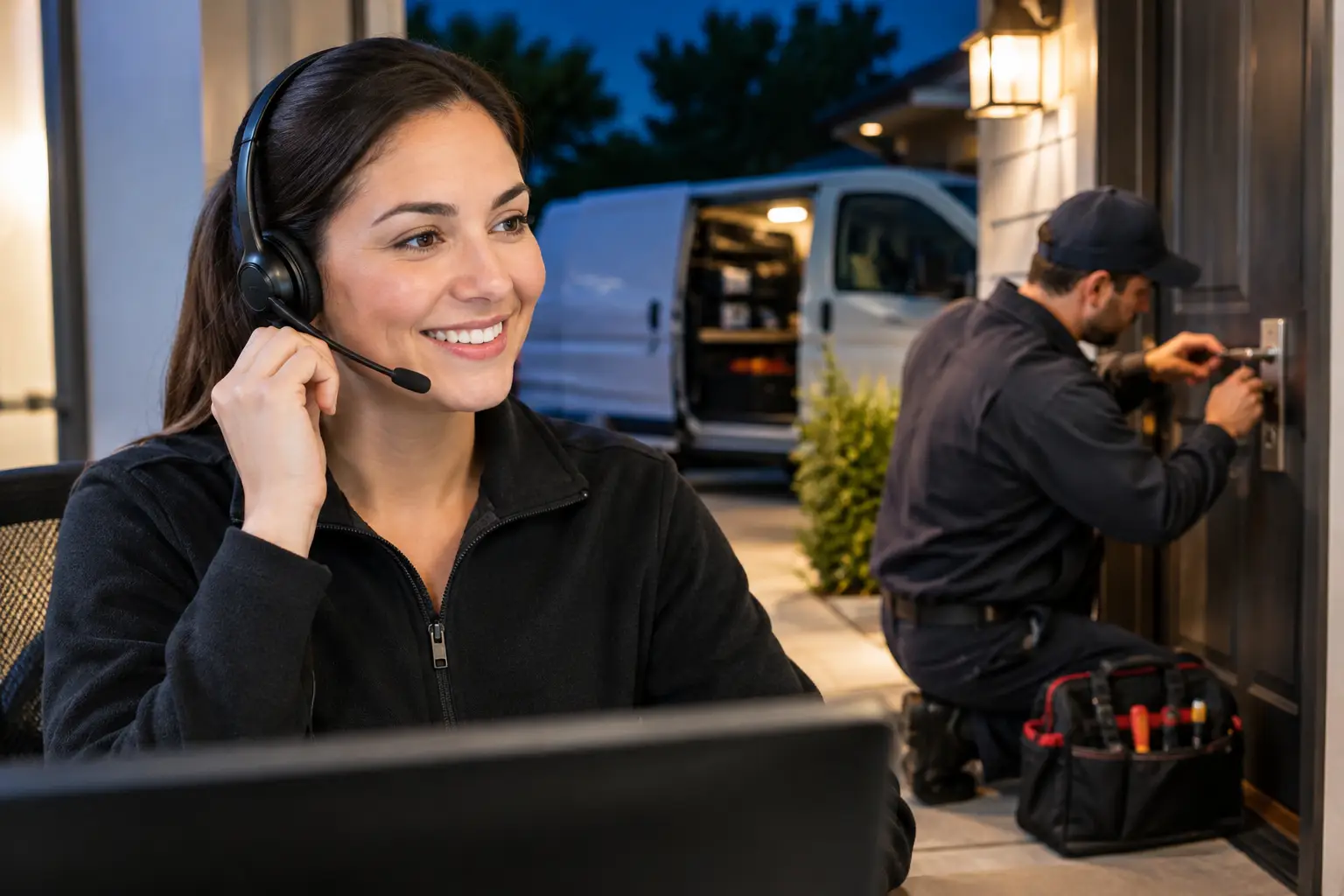
A customer standing outside a locked car at 11:40 p.m. is not comparing locksmith websites for long. They call the first number that looks credible. If nobody answers, they call the next one. That is why after hours locksmith call answering is not just an administrative task. It is the moment your marketing spend either turns into a job or disappears into a competitor's truck.
For a small locksmith operation, the problem is rarely a lack of skill or demand. It is that the owner is cutting keys, rekeying a commercial door, driving between calls, or trying to get a few hours of sleep. A ringing phone can be impossible to answer consistently. Voicemail feels like coverage, but an urgent caller often will not leave one.
The right setup gives callers a real response, gathers the details needed to dispatch, and gets urgent situations to the right person without making every late-night call your problem.
Why locksmith calls cannot wait until morning
Locksmith demand is unusually time-sensitive. A person locked out of a vehicle may be parked in an unfamiliar area. A property manager may need a tenant lock changed before morning. A business owner may have a damaged entry door after an attempted break-in. These callers want two things quickly: confirmation that someone can help and a realistic next step.
When the response is voicemail, uncertainty takes over. Did the message go through? Does the company serve this area? Is anyone available? Most callers do not wait for answers. They keep calling.
That pattern makes missed calls expensive in two ways. First, you lose a job that may have come from paid search, a local listing, referral traffic, or a wrapped truck someone saw nearby. Second, the customer who does reach a competitor may remember the company that answered when they needed help most.
Not every evening call is a genuine emergency, and treating every caller as one creates its own problems. A request for a routine lock rekey next Tuesday should not wake an on-call technician. Effective coverage separates immediate dispatch work from next-day appointments and general inquiries.
What effective after hours locksmith call answering does
Good after-hours coverage follows the same path a strong dispatcher would use: answer, qualify, route, book, and confirm. The difference is that it does this reliably when your team is tied up or off the clock.
Answer before the caller moves on
Speed matters more after hours because the caller often has several tabs open or several companies listed in a search result. A prompt greeting that identifies your business and asks how it can help gives the caller a reason to stay on the line.
The response also needs to sound specific to locksmith work. “Are you locked out of a home, vehicle, or business?” is more useful than a generic request to leave a message. The first question begins solving the dispatch problem immediately.
Capture details your technician can use
A name and phone number are not enough for an after-hours locksmith job. Before a technician heads out, they need the service address or current location, the type of lockout or security issue, vehicle or property details when relevant, and a clear callback number.
The intake should also identify practical dispatch facts. Is the caller safely located? Are they at a residence, commercial site, or roadside location? Is there damage to an entry point? Is the property within your service area? These details reduce back-and-forth calls and help the technician arrive prepared.
There is a balance here. Asking too few questions produces weak leads. Asking a stranded customer to complete a long interview produces hang-ups. The best scripts gather the dispatch essentials first, then save nonessential details for later.
Escalate real emergencies without creating noise
Your after-hours rules should be clear enough that the call handler knows exactly what to do. For example, vehicle and home lockouts within your service area may trigger an immediate text or call to the on-call technician. A commercial break-in or damaged door may follow a different escalation path. Routine rekey requests can be offered the next available appointment.
This is where many basic answering services fall short. They can take messages, but message taking is not dispatch. If an urgent lead sits in an inbox until morning, the customer has already moved on.
A conversational AI receptionist can follow the same decision path every time: collect the situation, confirm the location, determine whether it meets your emergency criteria, and alert the right person. The owner stays in control of the rules. The system handles the first response.
Book the work and follow up
When a caller does not need immediate dispatch, the next best outcome is a confirmed appointment. A booked rekey, key duplication visit, or commercial consultation is better than a vague promise that someone will call tomorrow.
Confirmation texts matter here. They give the customer a record of the appointment and reduce the chance that a lead goes cold overnight. For calls that end before full details are captured, an immediate missed-call text can invite the customer back into the conversation while they are still looking for help.
Build a call flow around your actual operation
The most useful call-answering setup reflects how your locksmith business already works. It should not force you into a complicated communications project or require your technicians to learn a new app while they are in the field.
Start by defining your service boundaries. List the cities, ZIP codes, or travel radius you cover after hours. Be honest about where late-night travel stops making sense. A clear boundary protects technician time and avoids promising arrival times you cannot meet.
Next, identify the call types that deserve immediate escalation. These may include residential lockouts, vehicle lockouts, commercial lockouts, broken key situations, or damaged entry access. The correct categories depend on your team, your equipment, and who is available on rotation.
Then decide what should be scheduled rather than dispatched. Routine lock changes, rekeys, lock installation estimates, and nonurgent commercial work may be valuable leads, but they usually do not require a 1 a.m. wake-up call. Give callers a clear appointment option instead of making them wait for a returned voicemail.
Finally, set escalation ownership. If you have one technician on call, the rule is simple. If you rotate coverage, the call flow must reflect the current schedule. An emergency alert sent to the wrong person is almost the same as no alert at all.
Keep your business number and your customer relationship
Many owners avoid changing their call coverage because they assume it means replacing the number printed on trucks, business cards, local listings, and yard signs. It should not.
With call forwarding, after-hours locksmith call answering can operate behind your existing advertised number. Customers still call the number they recognize. You keep your carrier relationship, your brand identity, and the option to change or reverse the forwarding setup when needed.
That matters for accountability. Your calls, lead details, and customer history should remain visible to your business. Searchable transcripts and call records make it easier to review what callers asked for, check whether an emergency was handled correctly, and spot gaps in your intake process.
Measure whether coverage is paying for itself
Do not judge call handling by whether the phone was technically answered. Judge it by job outcomes. Review how many after-hours calls became immediate dispatches, scheduled appointments, missed opportunities, and calls outside your service area.
You may find that a few time windows create most of the pressure: Friday evenings, weekend lockouts, storm nights, or the period after nearby businesses close. You may also find that certain lead sources generate low-quality calls. Those insights help you adjust staffing, service-area rules, and marketing spend.
Listen for the practical failures. Did the caller receive a callback number? Was the location captured accurately? Did the technician get the alert fast enough? Did a Spanish-speaking caller receive a clear response? These are operational details, not vanity metrics, and they determine whether the system earns trust.
Nexara is built for this kind of field-service workflow: calls can be answered around the clock, urgent situations can be escalated to the owner or on-call technician, and appointments can be placed on a live calendar without changing the number customers already know.
A locksmith business does not need every late-night call to become an interruption. It needs each legitimate caller to get a fast, useful answer. When the call is handled properly, you can wake up to the job already captured instead of waking up to a voicemail from a customer who hired someone else.