
Garage Door Repair Answering Service That Books Jobs
· 7 min read
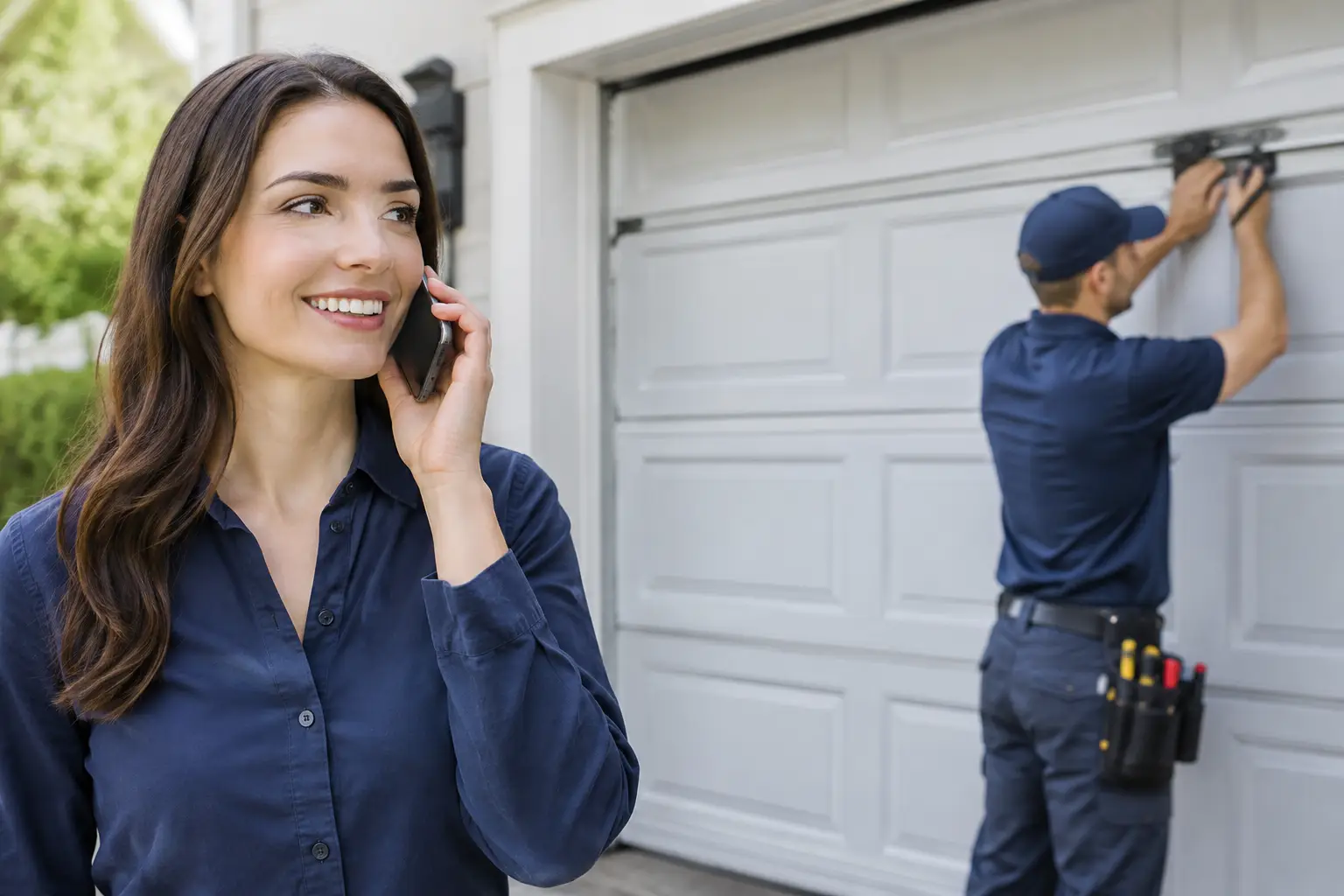
A garage door repair answering service is not just a way to avoid voicemail. It is the point where an urgent caller either becomes a booked job or calls the next company on Google. When a customer is standing in a driveway with a door stuck open, a car trapped inside, or a commercial bay that will not close, they expect an answer now. Your technician may be on a ladder, under a service call, or driving between jobs. The phone still has to be handled.
For a small garage door company, missed calls carry more than lost revenue. They waste the marketing dollars that made the phone ring, create gaps in the schedule, and hand repeat customers to competitors. The right call-handling setup gives callers a fast, useful response without asking the owner to stay attached to a phone all day.
Why garage door calls cannot wait
Garage door work has a mix of scheduled and urgent demand. A homeowner may call to schedule a new opener installation next week. Another caller may have a door off track at 8:30 p.m., a broken spring before work, or a door that will not secure a home or business overnight. Those calls require different conversations, but both need a clear next step.
Voicemail creates friction at the worst possible time. Even if your team returns the call within 20 minutes, the customer may already have contacted two other companies. A generic after-hours message is better than silence, but it does not collect the details a dispatcher needs, offer a time window, or tell the caller what happens next.
A dependable answering process starts by recognizing the reason for the call. Is it an emergency requiring immediate escalation? Is it a same-day repair request? Is it a quote, a maintenance request, or an existing customer checking on an appointment? That distinction protects your on-call technician from unnecessary interruptions while making sure serious situations get attention quickly.
What a garage door repair answering service should do
The baseline is simple: answer promptly, sound like your business, and capture the information needed to move the job forward. But a service built for a field operation should do more than take a name and number.
It should ask practical intake questions. For example, what is the issue with the door, is the vehicle trapped, is the door open or unable to close, what is the service address, and when can someone be there? It should also confirm the caller's name, callback number, and preferred appointment time. When the technician receives the job, they should not have to call back just to learn what happened.
Booking matters just as much as intake. If the caller wants a standard repair appointment and there is an available calendar slot, the service should reserve it while the caller is still on the line. A confirmation text gives the customer proof that the request was received. A follow-up reminder reduces no-shows and cuts down on back-and-forth calls.
For urgent calls, escalation rules need to be specific. A door stuck open after hours may need an owner or on-call technician notified immediately. A routine request for a remote replacement probably does not. The goal is not to treat every call as an emergency. It is to make sure the calls that truly cannot wait do not sit in a queue until morning.
The call workflow that keeps jobs moving
A strong setup follows the work as it actually happens: a call comes in, the caller is qualified, the job is booked or escalated, and the customer receives confirmation. The details matter at every stage.
Answer immediately and identify the business
Speed sets the tone. Callers with an unsecured garage, a trapped vehicle, or a failed commercial door are not looking for a menu tree. They want a person or receptionist experience that acknowledges the problem and starts helping.
The greeting should use your company name and make clear that assistance is available. This is especially important after hours. Your advertising, truck wraps, yard signs, and referral network have built recognition around your number. Callers should continue to feel they reached your company, not a disconnected third party.
Collect job-ready details
A vague message such as “garage door broken, call back” costs time. A job-ready intake provides the technician with the location, the type of problem, the door's condition, and the customer's urgency.
It also helps to capture access details when relevant. Is the car inside? Is the door open to the street? Is this a residential garage, a storage facility, or a commercial loading bay? The answer affects how quickly the call needs attention and what equipment the technician may need to bring.
Book, confirm, and document the conversation
For calls that fit the schedule, live calendar booking is a major advantage. It prevents double-booking and eliminates the need for a dispatcher to re-enter leads later. The customer gets a confirmed next step rather than a promise that someone will call them back.
The full conversation should be documented in a searchable transcript or clear call notes. That record is useful when a technician needs context before calling en route, when an office manager follows up, or when an owner wants to understand why a lead did not turn into a job.
Escalate only what needs an immediate response
After-hours coverage only works when it respects the on-call team's time. Define the situations that should trigger a call or text to the owner or technician. An unsecured property, a trapped vehicle, a commercial access issue, or a customer who needs same-night help may qualify. General estimates and non-urgent service requests can be captured and scheduled for the next available opening.
These rules should be easy to adjust. Service areas change, on-call rotations change, and a busy weekend may require different handling than a normal Tuesday afternoon.
Where traditional answering services fall short
Traditional answering services can provide coverage, but many stop at message taking. The operator may not know your garage door services, service area, emergency policy, or calendar availability. The result is a polite message that still creates another task for your team.
There is also a cost and consistency question. A staffed service may charge by call volume, minutes, or after-hours usage. During a storm, a neighborhood power event, or a heavy seasonal surge, more calls can mean a higher bill and more messages to sort through. An in-house receptionist offers familiarity, but fixed staffing costs and limited hours are hard to justify for many one-to-five-truck operations.
An AI front desk can be a better fit when it is configured around real dispatch rules rather than generic scripts. Nexara, for example, works behind the number you already advertise through call forwarding. You keep your carrier, your number, and control of the setup, while calls can be answered around the clock, appointments booked on a live calendar, and urgent situations escalated based on your rules.
That does not mean every business should use the same workflow. A company focused on commercial accounts may need account verification and different escalation paths. A residential repair company may prioritize same-day availability and rapid text confirmations. The system should reflect how you actually run calls, not force your operation into someone else's template.
Questions to ask before choosing a service
Before committing, test the service with scenarios your team sees every week. Call after hours and describe a door that will not close. Ask to book a standard repair appointment. See whether it can handle a Spanish-speaking caller if that matters in your market. Listen for whether the questions are useful or merely scripted.
You should also ask how quickly calls are answered, whether the service can book directly on your calendar, how emergency notifications are sent, and whether you can review transcripts. Confirm that you can keep your current business number and change or stop the forwarding arrangement without a drawn-out transition.
Pricing deserves a close look as well. A lower monthly rate is not a bargain if it only provides message taking and leaves your team to chase every caller. On the other hand, you may not need a complex dispatch platform if most of your work comes from straightforward repair requests. Choose the level of call handling that prevents lost leads without adding work to an already busy operation.
Make every call easier to act on
The best garage door repair answering service gives your business continuity when you cannot reach the phone. It turns a ringing line into a captured lead, a confirmed appointment, or a properly escalated urgent job. Just as important, it gives customers confidence that help is on the way.
Your crew should be free to focus on the door in front of them without wondering what happened to the last three calls. When the next urgent caller reaches a clear answer instead of voicemail, you wake up to the job already captured.