
After Hours Towing Dispatch Service That Captures Calls
· 7 min read
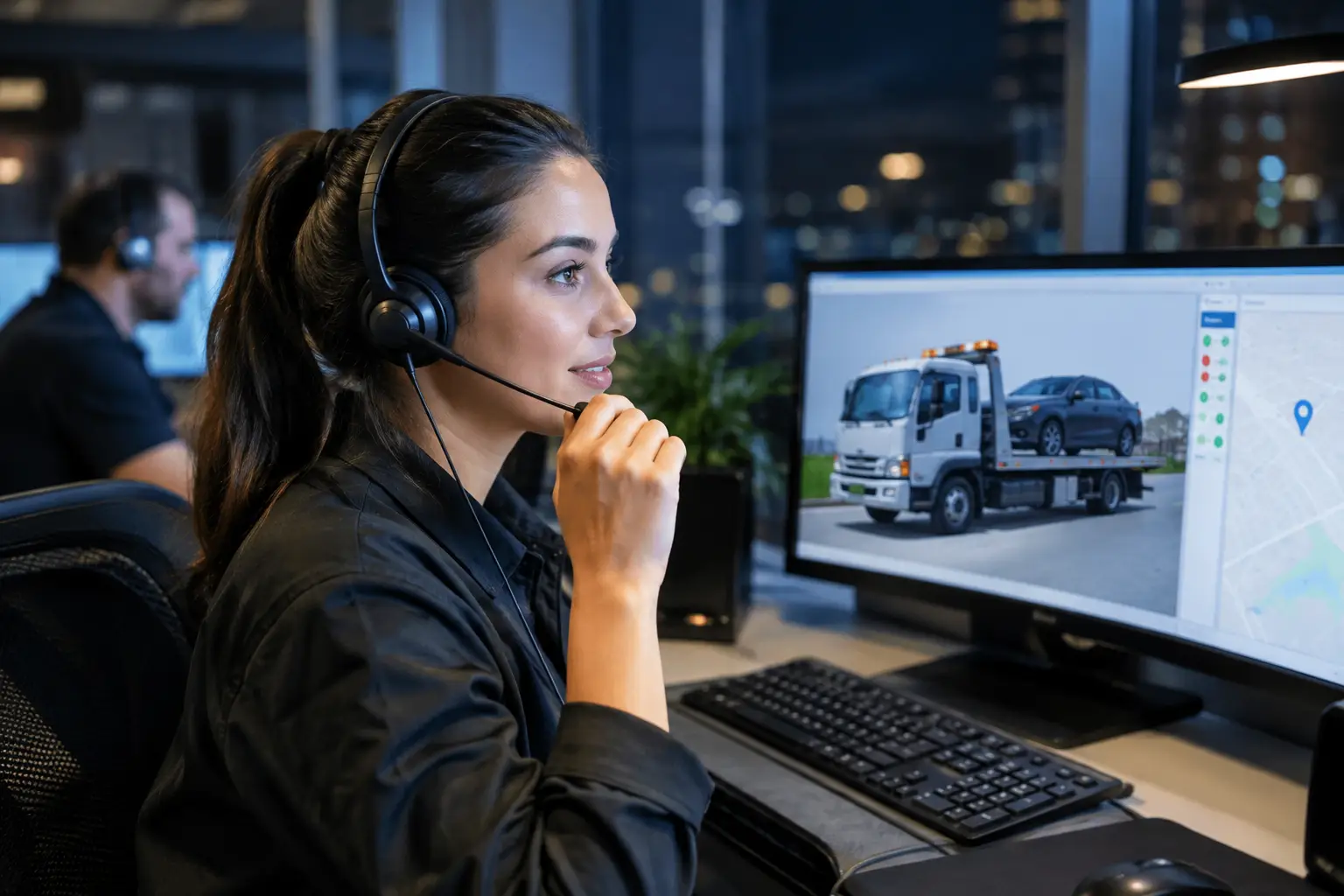
A stranded driver is not calling to leave a voicemail. They are calling because their car will not start in a dark parking lot, they are blocking traffic after a collision, or they need a tow before a business closes. An after hours towing dispatch service gives that caller a real response while your trucks are already working, your dispatcher is off shift, or you are trying to get a few hours of sleep.
For a towing company, missed calls are not just a customer-service problem. They are lost jobs, wasted ad spend, and openings for the next company in the search results. The operation that answers first often gets the hook.
The Real Cost of the Overnight Voicemail
Towing calls rarely arrive at convenient times. A battery dies after a late shift. A vehicle is locked out at a gas station. A customer needs a jump start in a garage where cell service is weak. A storm can turn a normal evening into a flood of calls in minutes.
If every after-hours caller reaches voicemail, several things happen. Some callers hang up immediately and call another provider. Others leave incomplete details: no exact location, no vehicle type, no callback number, or no indication of whether the situation is unsafe. By the time someone listens to the message, the job may be gone or the customer may be frustrated before your team has even spoken to them.
Hiring a person to cover nights can work, especially for larger fleets with enough volume to justify a staffed dispatch desk. But for a one-to-five-truck operation, round-the-clock payroll is a serious fixed cost. It also does not solve coverage gaps caused by breaks, sick days, weekends, holidays, or a sudden spike in calls.
The practical goal is simpler: every caller gets an immediate, professional response, the job details are captured correctly, and the right person is alerted when the situation requires action.
What an After Hours Towing Dispatch Service Should Do
Not all call coverage is useful dispatch coverage. A basic answering service may take a name and number, then email a message that sits unread while a driver is on the road. That is better than silence, but it does not move a towing job forward.
A useful after-hours system should follow the actual flow of a roadside call: answer, identify the need, collect usable information, determine urgency, notify the right person, and confirm what happens next.
Answer before the caller moves on
Speed matters because roadside customers are usually contacting more than one company if they cannot reach someone quickly. An immediate greeting under your business name reassures the caller that they have reached a legitimate local operation, not a generic call center.
The system should work behind your existing advertised number through call forwarding. That means your truck decals, Google Business Profile, yard signs, business cards, and repeat customers continue using the number they already know. You keep the carrier relationship and can change or reverse the forwarding arrangement when needed.
Capture dispatch-ready details
A dispatcher cannot send the right truck based on “I need a tow near downtown.” The intake needs enough detail for your team to make a decision without starting the conversation from scratch.
At minimum, a quality call flow should collect the caller's name and callback number, the exact pickup location, destination if towing is needed, vehicle make and model, the service requested, and relevant access or safety notes. It should also ask whether the vehicle is in traffic, on a highway shoulder, in a parking garage, or in another situation that changes how you respond.
There is a balance here. An after-hours caller should not feel trapped in a long questionnaire. The questions need to be direct and in the right order, beginning with location and safety when urgency is high.
Separate emergencies from routine requests
Not every late-night call needs to wake the owner. A scheduled transport request for tomorrow morning can be captured and followed up when the office opens. A customer stuck on an active roadway, however, needs immediate attention.
Your call process should define what triggers an urgent escalation. That might include a vehicle in a dangerous location, a crash-related tow, a stranded family after midnight, a law-enforcement request, or a contracted account that requires a response window. The right setup can alert an owner, on-call driver, or designated dispatcher immediately rather than treating every call the same.
Confirm the next step
A caller needs more than “we got your message.” They need to know their request was received and what will happen next. If a job is accepted, confirm the service request and callback process. If the call is being escalated, tell the customer that the on-call team is being notified.
Follow-up texts can reinforce that confirmation, reduce repeat calls, and give the customer a written record of the number they contacted. For the towing business, that small step can make a stressful interaction feel controlled.
Build the Call Flow Around Your Actual Coverage
The best workflow depends on how your company operates after hours. A solo owner may want only true emergencies routed to their phone, while non-urgent requests are collected for the morning. A small fleet may rotate an on-call driver. A larger operation may send new job details to a night dispatcher and use escalation only when the call involves safety, a police rotation, or a high-value account.
Start by writing down three categories: calls your team must respond to immediately, jobs that can wait until morning, and calls you do not serve. That last category matters. If you do not handle heavy-duty recovery, long-distance transport, or impounds after a certain hour, the caller should get a clear answer instead of being promised something your team cannot provide.
Then decide what information each category requires. A lockout needs a precise location, vehicle information, and proof-of-ownership process based on your company policy. A tow request needs pickup and destination details. A roadside emergency needs safety context before anything else.
This is where conversational AI can be useful when it is configured for towing work rather than handed a generic script. Nexara can answer calls around the clock, collect complete job details, handle conversations in more than 30 languages, and send emergency situations to the right on-call person without requiring your crew to adopt a new app or change your business number.
Avoid the Common Setup Mistakes
After-hours coverage fails when the call flow is built around convenience for the office rather than reality for the caller and driver. A few mistakes show up repeatedly.
First, do not make callers repeat everything when the on-call driver calls back. The handoff should include a searchable transcript or a clean job summary with the location, vehicle, service type, and urgency already documented.
Second, do not route every call to every person. That creates alert fatigue, especially during weather events or a busy weekend. Set clear escalation rules so the right person receives actionable information.
Third, do not overpromise arrival times. Traffic, distance, weather, police scene access, and current truck load all affect ETA. The call process should capture the request and set the next communication step without making commitments your dispatcher cannot verify.
Finally, test the experience yourself. Call your business number after hours from a mobile phone. Ask for a tow from an unfamiliar location. Ask in another language if that is relevant to your market. See whether the process gathers enough information for a driver to act. If it does not, adjust it before a real stranded customer finds the gap.
Measure Whether Coverage Is Paying Off
You do not need a complicated reporting project to judge whether after-hours call handling is working. Review how many calls arrived after normal hours, how many became booked jobs, how quickly urgent calls were escalated, and how many callers were rescued after an abandoned or missed call.
Compare those results with the money you already spend to make the phone ring. If you pay for local search ads, roadside directory placements, or referral programs, every unanswered call weakens that investment. A captured job does more than create revenue for one night. It can lead to a saved contact, a positive review, and the next call from that customer or fleet account.
The trade-off is worth stating plainly: no call system can create truck capacity that does not exist. If every unit is committed, callers still need accurate expectations. But a well-run after-hours process lets you know what demand is coming in, prioritize safely, and avoid losing work simply because nobody picked up.
When the phone rings at 2:13 a.m., the customer is not judging your business by your office hours. They are judging whether someone answered and whether help is moving. Set up your calls so you wake up to a job already captured, not another voicemail from a customer who has already called someone else.